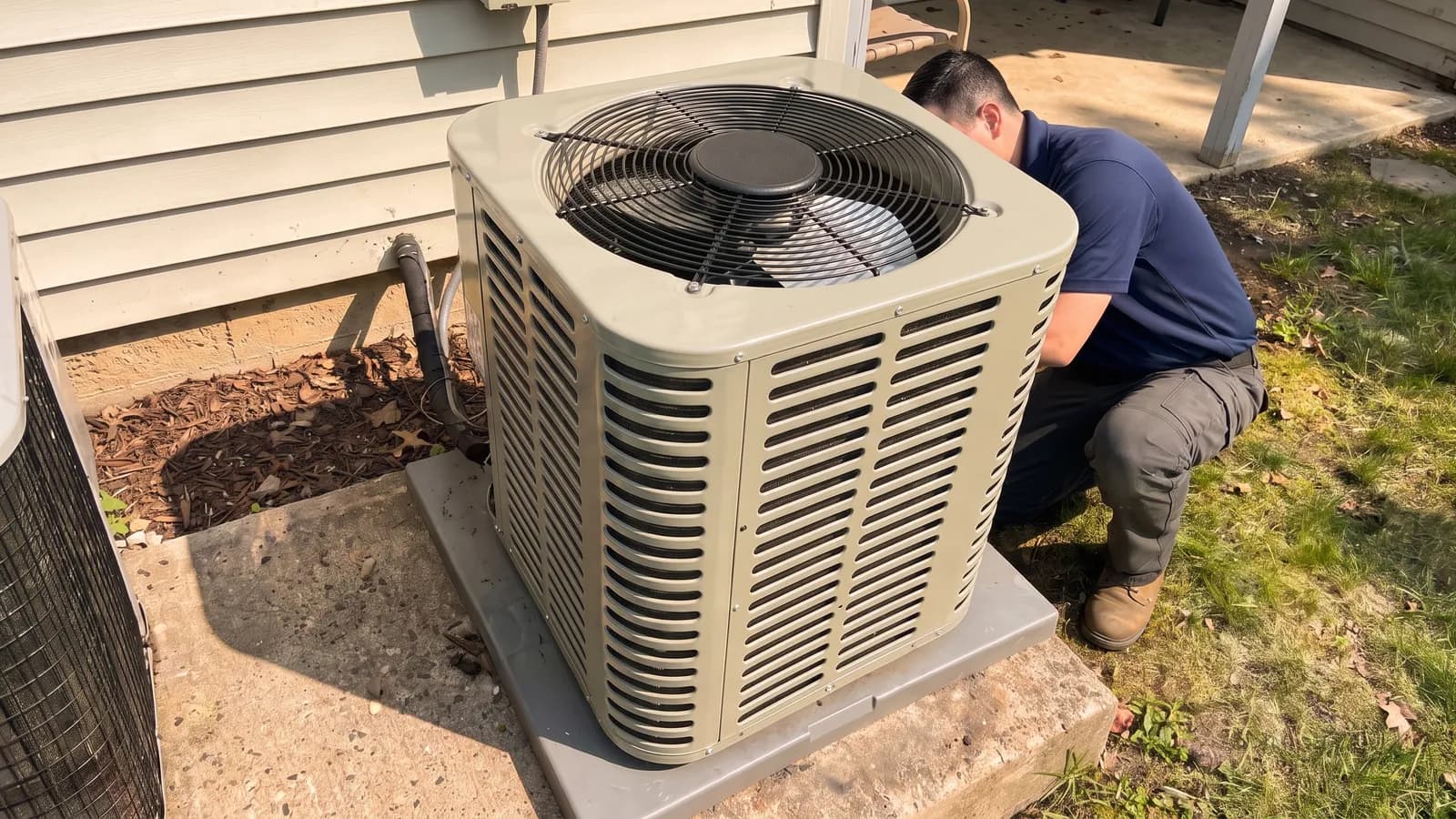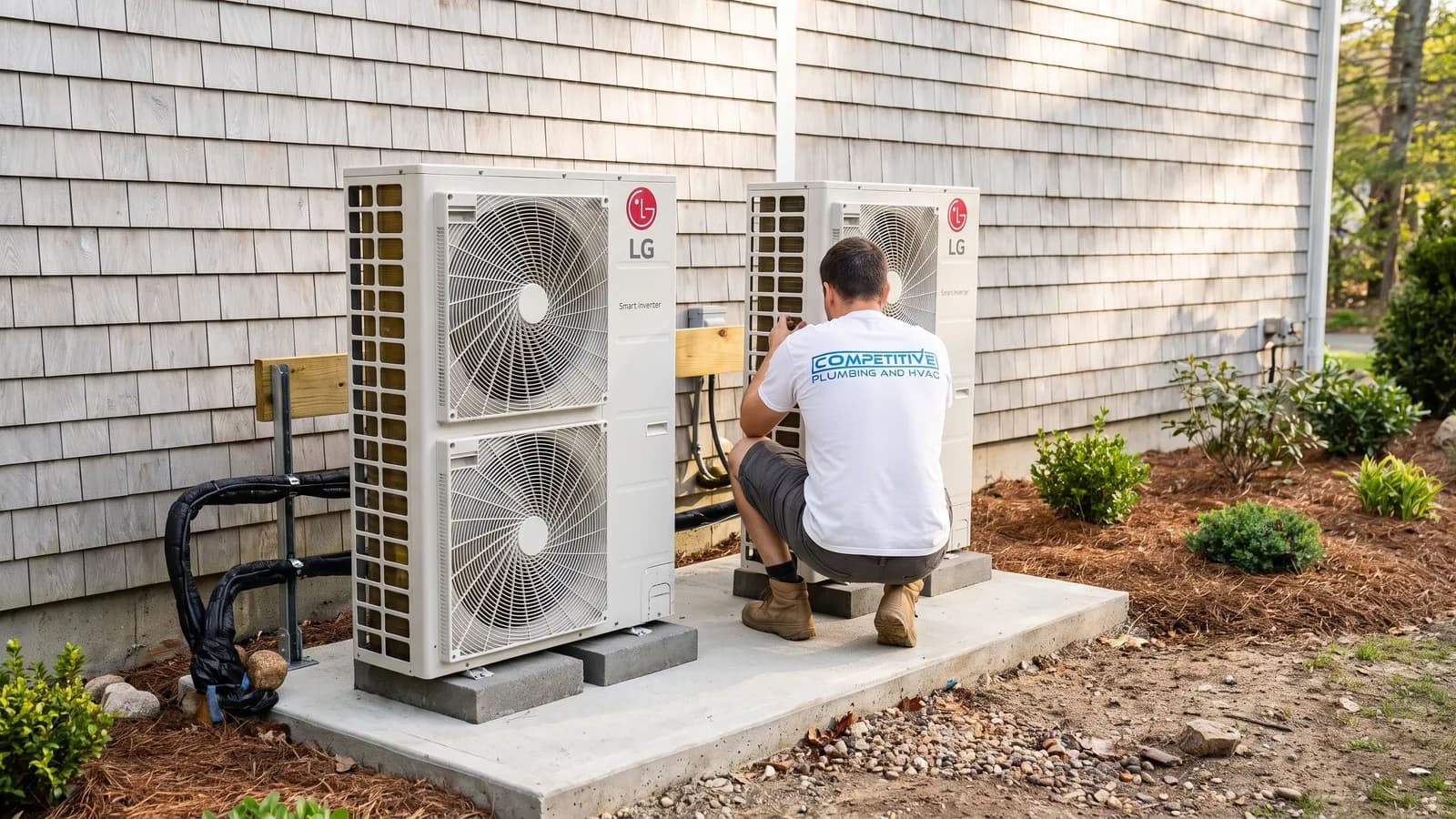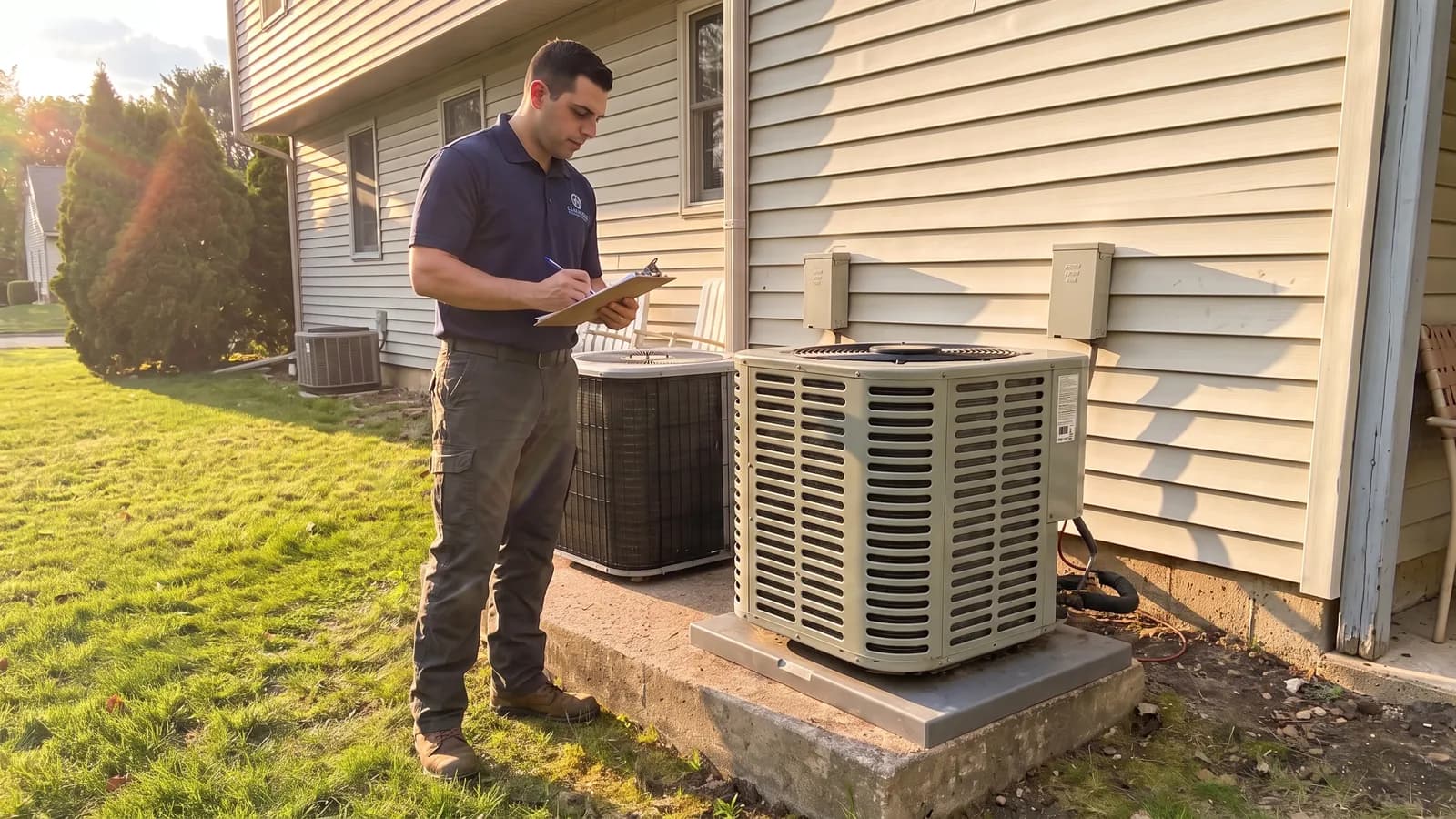
This is the second-worst call of the summer: the AC died in a heat wave, and the diagnosis isn't a capacitor — it's a compressor, a coil, or a leak with a four-figure fix. Now you're making a five-to-ten-year financial decision with the house at 86°F. So let's pre-make it, calmly, with the framework we use when it's our own equipment.
The 50% rule (and where it doesn't apply)
The rule we publish on our AC repair page and stand behind: if the repair costs more than half of a comparable new system, and the unit is 15+ years old, replace. Both halves matter. A $1,800 repair on a 6-year-old system? Repair — the unit has a decade left. The same repair on a 16-year-old? That's half the cost of new equipment spent on the oldest, tiredest version of the system, with the next failure already loading. Central AC in coastal Massachusetts averages 12–15 years of service life; salt air on the SouthCoast and Cape-adjacent towns trims the top end.
Where the rule does *not* apply: small electrical repairs. Capacitors, contactors, condenser fan motors — these are wear items, cheap relative to the system, and worth doing at nearly any age. The rule is for the big three: compressors, coils, and refrigerant leaks. And the $50 repair coupon applies either way.
The refrigerant chess board: R-22, R-410A, and what happened in 2025
Refrigerant type quietly decides a lot of these calls, so date your system (the nameplate on the outdoor unit lists the refrigerant):
- R-22 (most systems installed before 2010): production and import ended in 2020; every pound used for service since has come from reclaimed stock at collector prices. A refrigerant-circuit repair on an R-22 unit means pouring money into a supply chain that's evaporating — our rule drops the replacement age to 12 years for these, and honestly, any major R-22 repair is a replace conversation.
- R-410A (roughly 2010–2024 installs): the successor is now itself being phased down. Under the federal HFC schedule, new residential systems manufactured since January 1, 2025 use lower-GWP refrigerants — mostly R-454B and R-32. R-410A remains legal and available for servicing existing units, but its production allocation shrinks on a schedule, which means service costs on 410A systems follow the same rising curve R-22 owners know by heart — just earlier in the movie.
- R-454B / R-32 (2025+): what a new system buys you — current refrigerant with decades of service supply ahead, plus the efficiency jump of current-generation equipment.
The efficiency line item people skip
A 15-year-old system was likely 13 SEER when new and has degraded since. Current equipment runs SEER2 14.3 at minimum and 16–18 in the sweet spot of the market — a meaningful cut in cooling cost every summer for the next fifteen. It's rarely the deciding factor on its own, but on a borderline 50%-rule call, the operating savings are real money that belongs in the math, alongside the ten-year parts warranties current equipment carries versus whatever remains on yours: nothing.
The replacement plot twist: maybe don't buy an AC
If you're replacing anyway, run one more quote before signing: a cold-climate heat pump instead of a straight AC. Same ductwork, same footprint — but it heats too, and it unlocks the Mass Save side of the board: rebates up to $8,500 and 0% HEAT Loan financing that a like-for-like AC swap doesn't get. After incentives, a heat pump conversion frequently lands within shouting distance of a plain AC replacement, while also taking a bite out of your oil or gas bill. We ran the full program numbers in our Mass Save rebate guide, and the replacement process is the same either way: Manual J sizing, written itemized quote, 1–2 day install.
The five-minute decision path
- 1Get the diagnosis and repair number in writing. A real quote names the failed component, not a vibe.
- 2Check the nameplate: R-22 → replace conversation now. R-410A → continue.
- 3Apply the 50% rule with the unit's age. Under 12 years and under half: repair. Over 15 and over half: replace.
- 4In the borderline zone (12–15 years): weigh efficiency savings, remaining warranty, and how the refrigerant curve treats a unit you're hoping gets five more summers.
- 5If replacing: price the heat pump next to the AC before you sign anything — and note the $500 installation coupon currently runs through July 31.
We'll do the math with you, out loud, either direction — we make our living both ways, so we genuinely don't care which side wins, only that it's the right call for your house. Same-day diagnostics across Southeastern Massachusetts, from Lakeville and Dartmouth up through Hingham: (508) 944-7623.